The importance of Gorilla and Chimpanzee Census in Uganda
One of the wildlife restoration programmes that supports the nation’s conservation efforts in development and sustainability is the gorilla and chimpanzee census. In collaboration with conservation groups, the Uganda Wildlife Authority (UWA) recently set aside over USD 1 million (Shs3.6 billion) to carry out the first-ever chimpanzee census and the sixth mountain gorilla census in the Bwindi-Sarambwe Conservation Area.
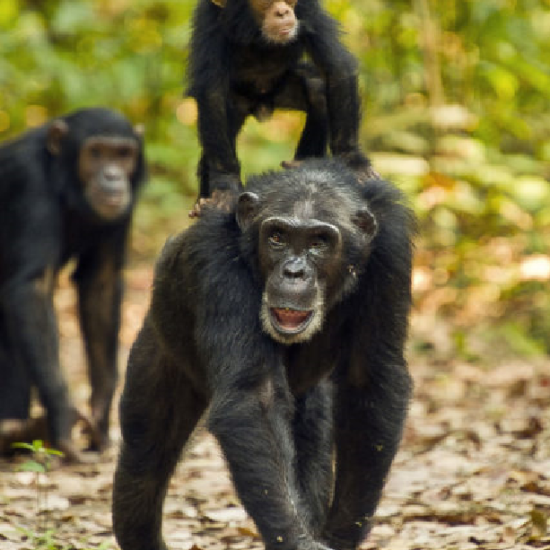
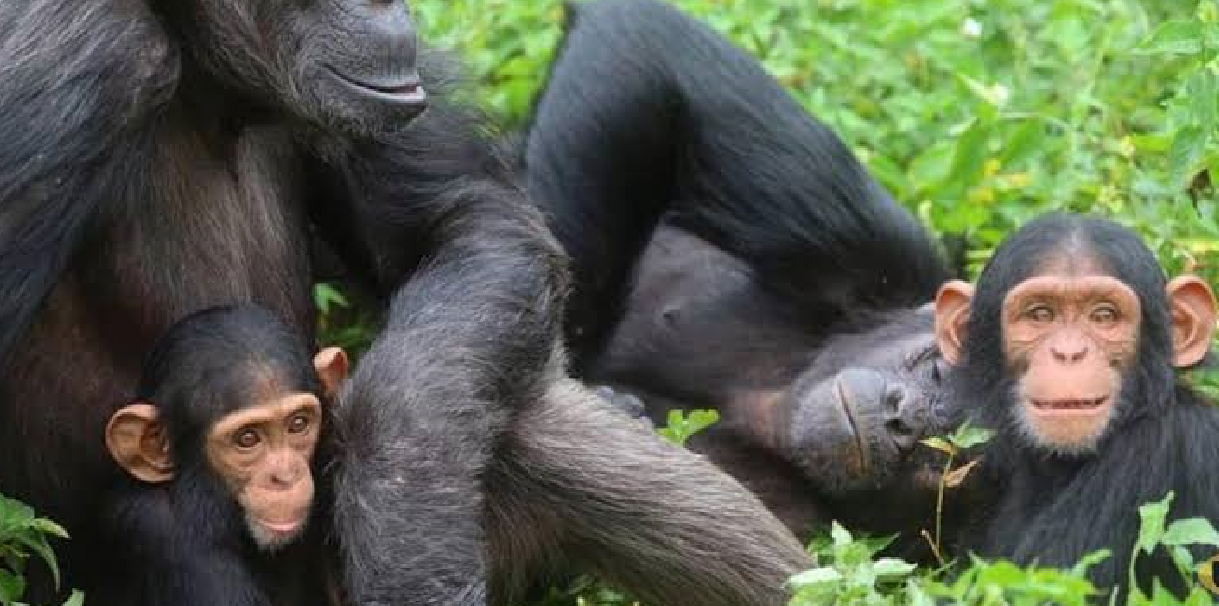
An estimated 426 chimpanzees were found throughout the park when the Bwindi Impenetrable Forest Chimpanzee Census was carried out in 2025. This appears to be a significant turning point in bolstering conservation evidence in one of the most protected ecosystems in Africa. At the Uganda Wildlife Authority headquarters in Kampala, Hon. Bahinduka Mugarra Martin, Uganda’s Minister of State for Tourism, Wildlife, and Antiquities, presented these chimpanzee results.
Bwindi Impenetrable National Park, a UNESCO World Heritage Site known for its enchanted mountain gorillas, has long served as a global paradigm for great ape conservation. In addition to legally incorporating chimpanzees into park-wide conservation strategy alongside gorillas, this first devoted and systematic chimpanzee census greatly advances scientific knowledge of Bwindi’s great ape community.
The Greater Virunga Transboundary Collaboration, the Uganda Wildlife Authority, and the Jane Goodall Institute Uganda carried out the census in May and June of 2025. It offered a thorough baseline on the number, density, and distribution of chimpanzee populations throughout the park’s 320.9 square kilometers.
To establish a baseline on chimpanzee population size, density, and distribution and confirm their wide habitat range, researchers surveyed these 320.9 square kilometers in four park sectors of Ruhija, Buhoma, Rushaga, and Nkuringo using standardized techniques like line transect surveys, marked nest counts, and standing crop nest counts. from higher elevations of montane habitats to a mixed Afromontane tropical rain forest.
According to reports, there were roughly 426 chimpanzees in the Bwindi Impenetrable Forest. This is the first time that chimpanzees in Bwindi have ever been counted. In contrast to their counterparts in Kibale Forest National Park, Kyambura Gorge, Bugoma Forest, and Kalinzu Forest Reserve, this population of chimpanzees has not undergone the habituation process. While we look forward to the exercise, the gorilla census is still in the works.
Over 459 gorillas were counted in Bwindi Impenetrable National Park at the most recent gorilla census, which was carried out in 2018. The International Gorilla Conservation Programme (IGCP) Director, Mr. Wellard Makambo, stated that this program aids in giving precise data on the local population of these great apes, which is crucial for efficient conservation planning and management.
The widespread distribution and significant confirmation of chimpanzees in Bwindi Impenetrable National Park enhances awareness of the park’s importance as a habitat for big primates, including apes and other wildlife species. It emphasizes the necessity of employing scientific data to monitor and maintain these protected areas, particularly in light of habitat pressure, climate change, and human activity that is increasing the demand for resources and land.
The census also aids in determining the present great ape population in Bwindi and evaluating the effectiveness of earlier conservation initiatives. Additionally, it draws attention to regions that require further care, Mr. Makambo stated. Mr. James Byamukama, Executive Director of the Jane Goodall Institute, described the chimpanzee census as a turning point in regional conservation during his remarks during the census’s opening in Ruhija sector, Rubanda District.
This is a historic occasion. Almost 65 years have passed since Dr. Jane Goodall started gathering scientific data on chimpanzees in Gombe, Tanzania, on July 14, 1960. According to him, “the research changed global awareness and conservation policies for chimps.” The UWA Executive Director, Dr. James Musinguzi, stated that this census is crucial to improving the organization’s logistical and human resources to guarantee better wildlife protection.
This is demonstrated by expanding transportation infrastructure, personnel, and equipment to better safeguard our species for coming generations. Dr. Musinguzi stated, “I am grateful to the International Gorilla Conservation (IGCP) for spearheading this integrated effort and to the Jane Goodall Institute for their unwavering efforts in starting the chimpanzee census alongside the gorilla count.
Bwindi-Mgahinga’s conservation manager, Mr. Nelson Guma, expressed worries about the expanding civilian settlements surrounding the protected areas. He pointed out that the health of wildlife is at risk due to inadequate trash management by new town authorities.